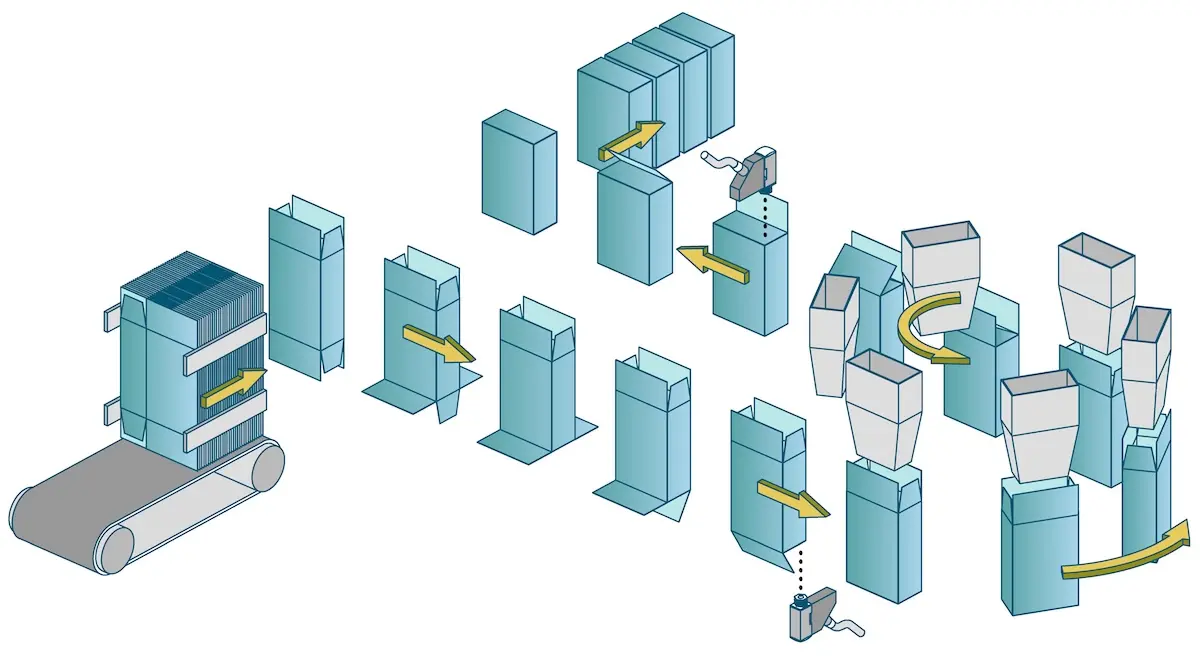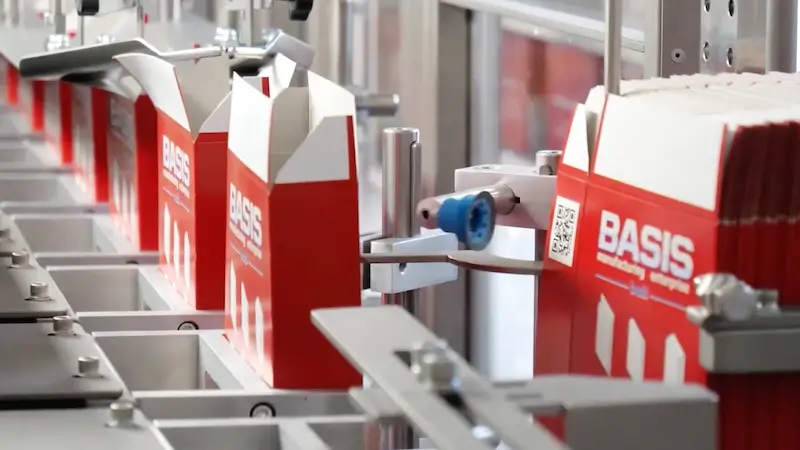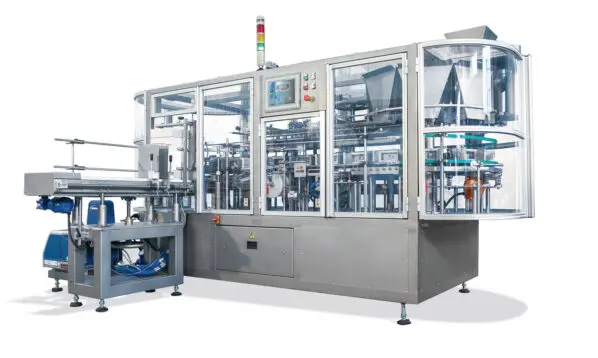
Intermittent and continuous vertical cartoning machines are two common types used for packing products into cartons, and they differ mainly in their operational modes:
Operation: Works in cycles; the motion stops during carton loading and sealing processes.
Applications: Best suited for products that require precise placement or handling, such as fragile or irregularly shaped items.
Advantages:
Easier setup and maintenance
Lower initial cost
More precise control over product loading
Limitations: Lower speed compared to continuous machines
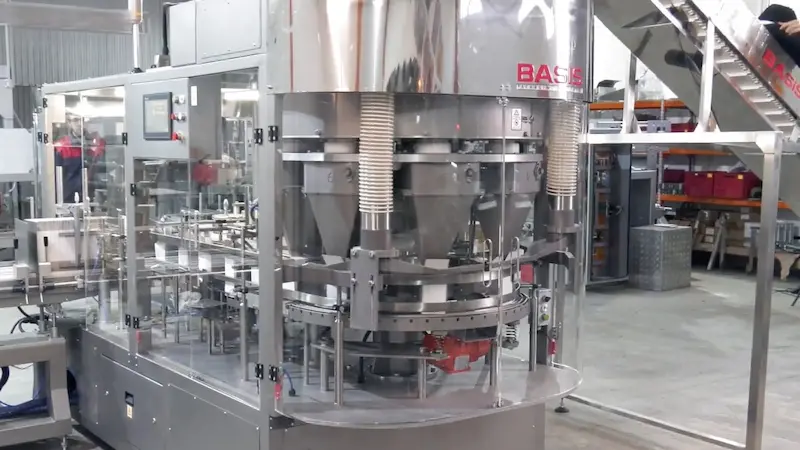
Operation: Operates without stopping, maintaining a continuous flow of product loading and carton sealing.
Applications: Ideal for high-speed production environments, especially for standardized products.
Advantages:
Higher production speed
Increased efficiency for large volumes
Limitations:
Higher maintenance and operational complexity
Less flexibility in handling delicate or irregular products
| Model | BASIS-100-VCC | BASIS-45 | BASIS-43-VCI | |
| Capacity, boxes/min., up to | 100 | 25 | 40 | |
| Type of dosing device | Volumetric/ Multihead weigher |
Auger filler + multihead weigher |
Auger filler + multihead weigher |
|
| Principle of operation | continuous | intermittent | intermittent | |
| Gluing station | Nordson/Robatech | |||
| Power consumption (without glue station), kW |
3,9 | 3,9 | 2,5 | |
Box sizes:
|
60…180 |
60…180 |
Standard 60…180 30…85 130…260 |
Gable-Top
60…180 |